Local detail
The Cost of This Job
What a repair runs depends on what broke and how old the hardware is. A door built when this city's housing stock went up - median year 1962, most of it finished before the mid-1970s - usually carries a torsion spring sized for a heavier, single-layer steel panel, not the insulated sandwich panels sold today. Replacing one spring is a different job than replacing a worn torsion drum shaft and bearing plate that corroded decades ago, and we don't quote a number over the phone before seeing which parts have failed. Median household income across the service area here runs $100,558, high enough that most owners choose a real repair with matching hardware instead of patching a dying spring with a shim or an extra turn of tension - a shortcut that just moves the failure point to the next part in line. Openers are a separate cost line from the door itself; a chain-drive unit installed decades ago on one of these houses is a different animal from the belt-drive units going in now, and parts for the older motors aren't always something we can get same-day. That's the one honest limit here: if your opener is original to a 1960s build, the exact gear or circuit board might need to be ordered, and that adds days, not hours, to the job.
The area
When to Call Someone
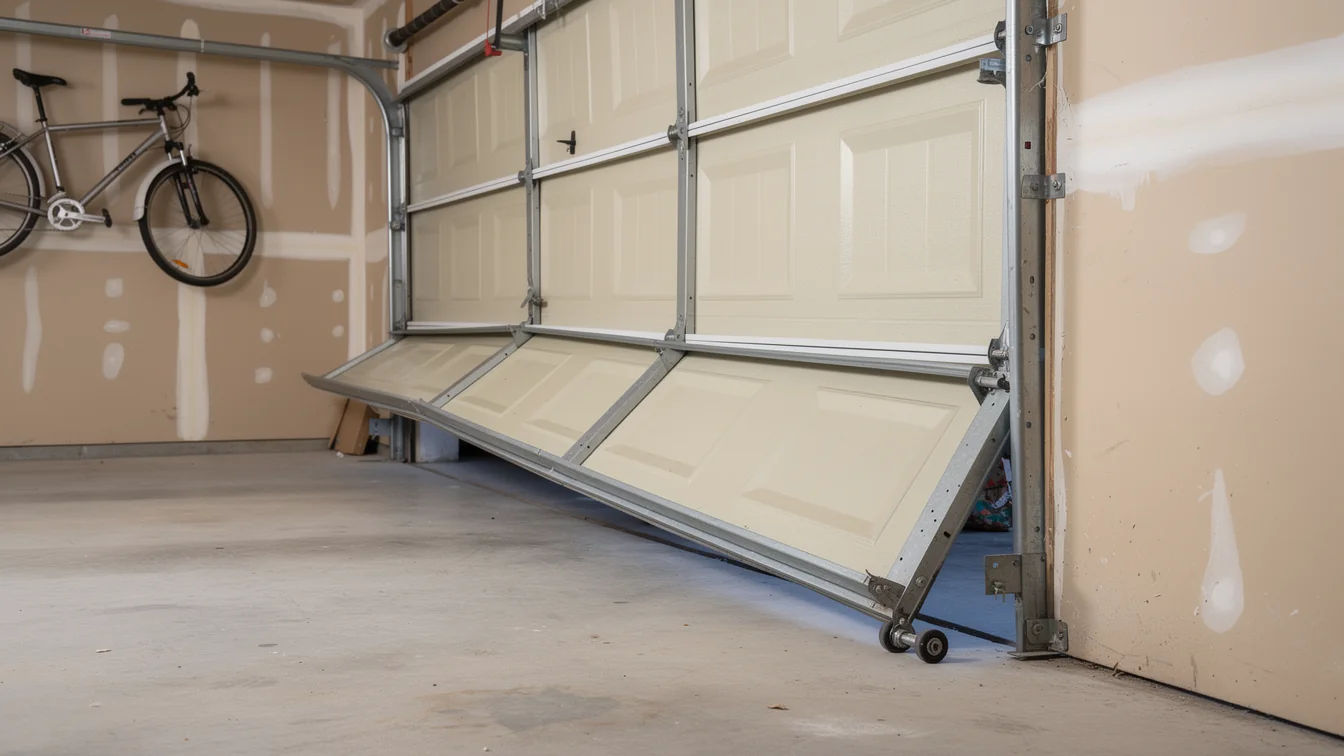
A grinding sound when the door starts to lift usually means a roller has worn through its nylon jacket and is running on bare metal - on a door of this age, the roller and the track it rides in were never resurfaced, so metal is wearing against metal. That doesn't wait. A loud bang followed by the door refusing to move almost always means a torsion spring let go, and on a door old enough to have outlived its original cycle rating, that's not a surprise, it's overdue. With 200,019 owner-occupied houses in this part of the valley and most of the stock from that same 1960s-70s era, this is one of the most common calls we get, not a rare one. A soft thud or a slight hesitation partway up the track is worth a call but not an emergency - it's often a bent track bracket or a cable starting to fray, something that gets worse slowly rather than all at once. What doesn't need a same-day call: a squeak that shows up only on the first cold morning of the week and goes away once the door's been run a few times. That's dry metal, not a failure. Save the rush-job premium for the bang, the grind, and the door that won't close square.
What we find
What the Weather Here Does to It
This city sits in a moderate-heat climate band - not the extreme desert swings some inland valleys get, but enough sustained summer heat to dry out the factory grease on rollers and torsion springs faster than a cooler town would see. That dried grease is what turns a quiet door into a squeaking one, and on hardware already pushing fifty or sixty years old, the metal-on-metal contact that follows wears a groove into the roller stem and the spring coil both. The rubber astragal strip at the bottom of the door takes the same beating - summer heat hardens and cracks it, then it stops sealing, and the gap lets in the debris that jams a roller later. None of this is dramatic weather, no hail dents, no flood lines on a panel. It's the slow kind: steady heat, repeated expansion and contraction of steel track brackets mounted to a house frame built in the early 1960s, and bolts that loosen a quarter turn at a time over a decade. The fix is usually simple - lubricate, replace the astragal, check hardware torque - but it only works if someone does it before the noise turns into a stuck door. Heat alone has never ended a door's life, but it reliably speeds up the ending caused by something else.
How we work
The Problem
Most of the noise calls we get trace back to one thing: original hardware that's outlived its design life. With housing built between 1943 and 2012 but a median year of 1962, the typical door in this part of town has gone through five, six, sometimes seven decades of daily cycles on springs and rollers that were never meant to last that long without a swap. Across the 48 named areas in this part of the valley that share that same 1960s-70s building wave, the pattern repeats: steel rollers instead of nylon, single-torsion-spring setups built for lighter doors, and openers with gear-driven mechanisms that are now the hardest parts to source. Duarte, three miles up the road, sits in that same build window, and a door up there wears out on the same schedule as one here - this isn't a this-neighborhood-only problem, it's an era problem. The noise is the hardware telling you it's past the point where lubrication fixes it. A spring that shrieks on every cycle isn't dirty, it's fatigued. A roller that clunks isn't loose, it's shaped wrong from wear. Treating the symptom - oil, a tighter bolt - buys a few weeks on a door built this long ago. Treating the cause means replacing the part that's actually failing, which is most often the spring, the roller, or the cable, in roughly that order of frequency on doors this old.
Talk to a local pro
Garage door trouble in Azusa?
Same-day service with honest, upfront quotes.