Why It Happens Here
Most of Azusa's garage doors date back to a housing stock built mostly in the 1960s and 70s, with a citywide median construction year of 1962. Doors from that era were almost always single-layer steel or wood, hung on hardware sized for the openings builders cut back then, not the standard widths you see in big-box stores now. That reach extends into neighboring Duarte, Monrovia, and Covina, all within four miles, where the same post-war building boom put up houses with nearly identical openings.
Azusa sits in a moderate-heat climate band, not the high-desert extremes you get further east, so steel doors here fail from UV and thermal cycling rather than from the kind of deep cold that cracks seals in colder states. Sixty summers of panels expanding and contracting against old tracks loosens hinges, bows thin steel, and throws doors out of square well before the opener or springs give out. By the time a homeowner calls about a sticking door, the door itself is usually the problem, not just the parts bolted to it. That's a replacement conversation, not a repair ticket.
The Symptom
You'll notice it before you can name it. The door looks slightly crooked in the frame even closed. One bottom corner scrapes the slab or won't seat flush, so weather and light show through a gap that wasn't there when the house was new.
Bowed panels from sun
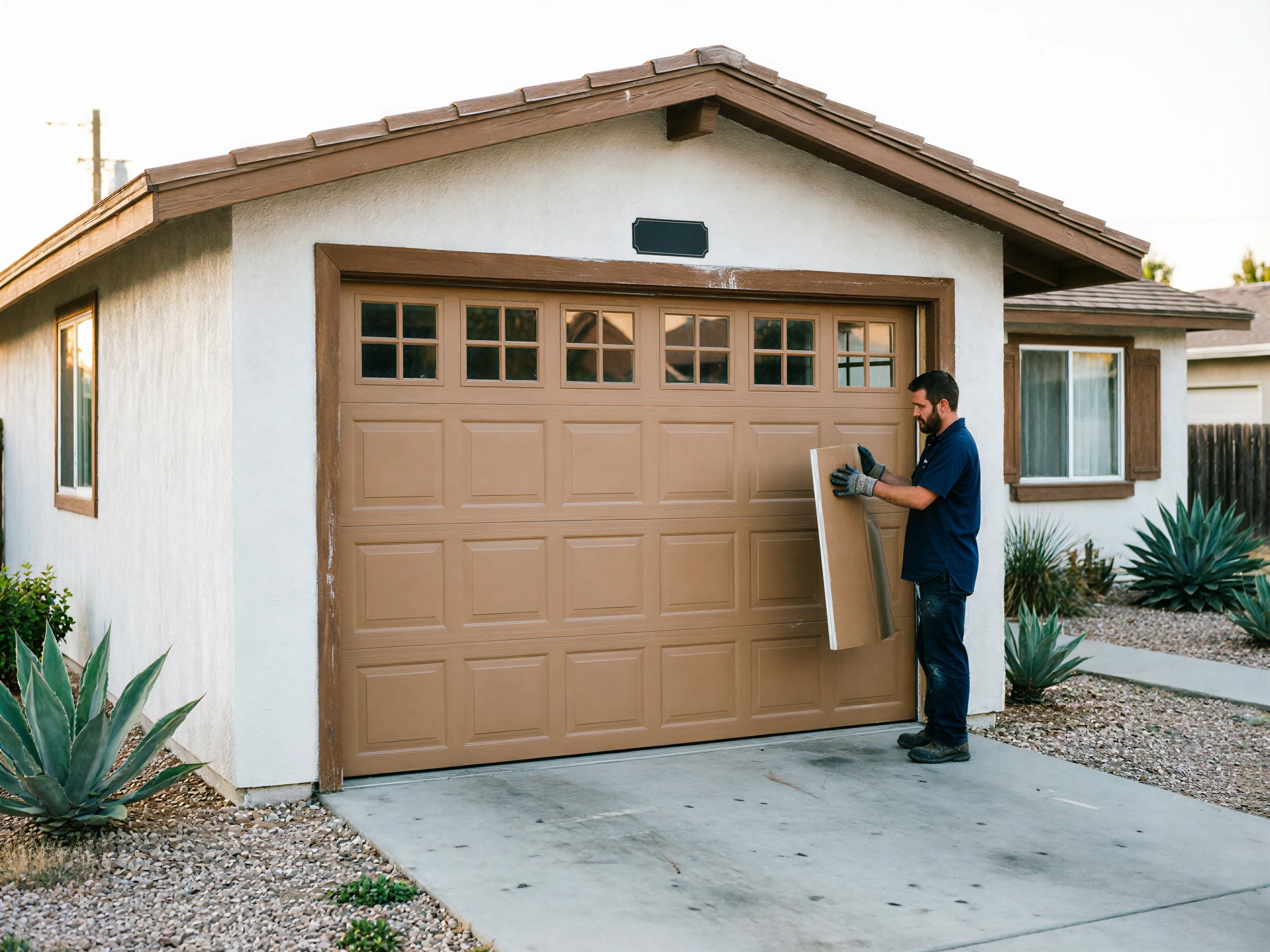
Panels on an original 1960s door often show visible waviness or a soft bow across the middle, especially on the sun-facing side of the house. Openers strain harder than they should, cycling slow or stalling partway, because they're fighting a door that no longer travels straight in its tracks.
Cumulative age-related wear
Weatherstripping crumbles and leaves a draft along the bottom edge. None of this is a single broken part you can swap out. It's the cumulative effect of original hardware and an original opening that's 50-plus years older than anything sold to fit it today.
Block age patterns
Across the service area's 200,019 owner-occupied houses, the split between older single-panel doors and newer sectional doors tracks pretty closely with when each block was built - older tracts show this symptom first.
How to Book
Start on our site at Azusa Garage Door Pros and send over the basics: the age of your house if you know it, roughly how wide the opening is, and what you're seeing - sagging, gaps, a door that's hard to lift by hand. A clear opening measurement and a photo of the current door save a trip and let us bring the right sizes on the first visit.
With a median household income of $100,558 across the area, most owners here can afford a straight swap to a modern insulated door instead of patching hardware that's older than they are, and we'll walk you through what that costs before anything gets ordered. If your opening turns out to be a non-standard width - common on houses from the 1960s tract-building years - we'll say so up front rather than forcing a stock size into a frame that won't take it.
Can You Do This Yourself
A full door installation is not a weekend project, and we'll say that plainly. A sectional door weighs more than most people expect, the track has to be plumb on both sides or the door binds within weeks, and torsion spring tension stores enough energy to cause real injury if you don't have the right bars and clamps. None of that changes because the house is older or newer.
Where a homeowner can genuinely save money is in the groundwork: clearing the opening, pulling old trim, removing an abandoned opener bracket, or repainting the jamb before the new door goes in. That prep work doesn't require special tools. The actual hang, the track alignment, and the spring set are where we'd tell you to call rather than improvise, especially on an opening built to 1960s dimensions that may need shimming most stock installers won't expect.
Talk to a local pro
Garage door service in Azusa?
Same-day service with honest, upfront quotes.