Local detail
The Cost of This Job
What a job costs here has more to do with the door's age than with anything flashy. Median household income across this service area sits at $100,558, and most of the housing stock went up between 1943 and 2012, with the median build year landing at 1962. A door built to that era's spec - often a single-panel or early sectional door on side-mounted torsion hardware - isn't something you pull off a shelf at a big box store. Parts for that generation sometimes have to be tracked down or substituted, and that adds labor time even on a job that sounds simple over the phone.
Across the wider area there are roughly 200,019 owner-occupied houses out of 449,133 households total, and a good share of those are the 1960s-70s tract homes that make up most of the 48 named communities nearby. That volume of similar-aged stock means we see the same handful of failure patterns over and over: original springs that have outlived their rated cycles, openers bolted to brackets that were never rated for the weight of a later replacement door. None of that is a guess about your specific house - it's what the age of the neighborhood tells us before we even get there.
We don't quote a price sight unseen, because a torsion spring swap and a full door replacement are not the same job, and we're not going to pretend otherwise.
The area
When to Call Someone
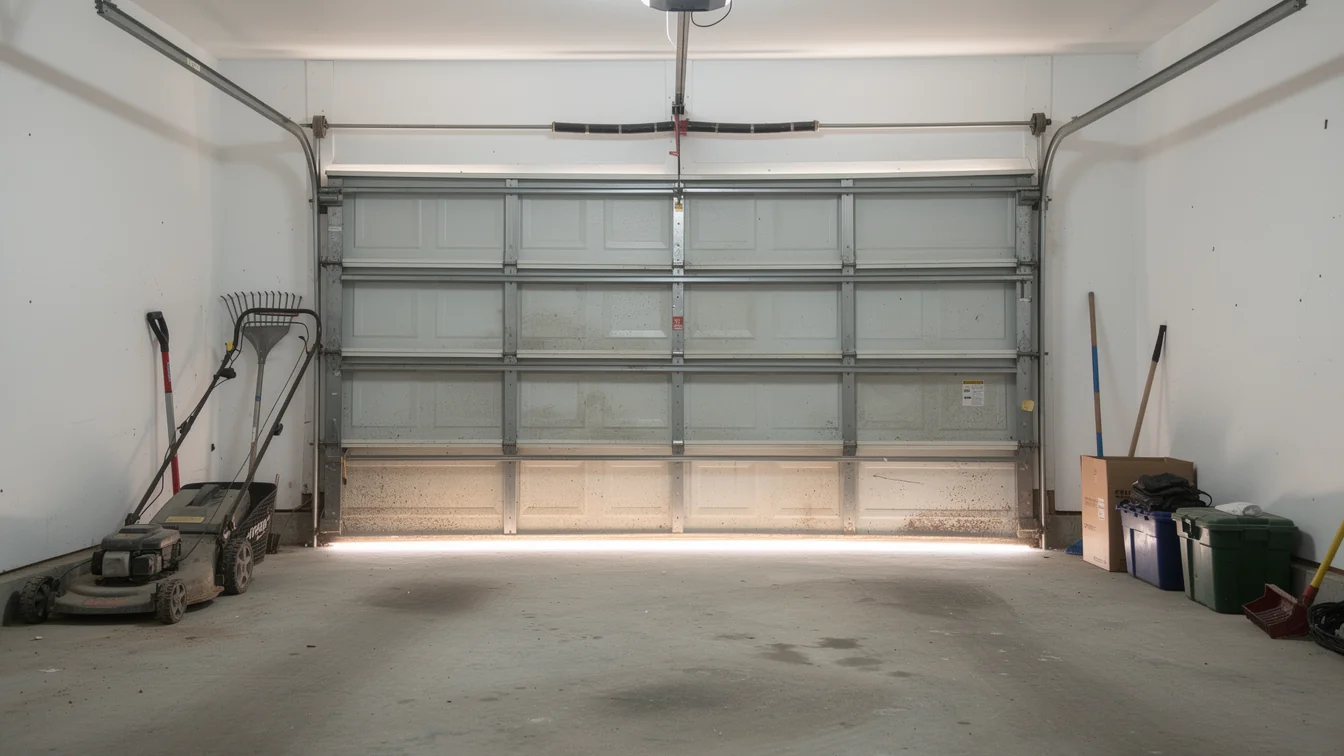
If the door is slow to lift, or one side drops faster than the other, that's usually a spring losing tension unevenly - not something to keep opening and closing while you decide. On a house from the 1960s-70s era, the torsion hardware is often original or close to it, and springs rated for a lighter door decades ago are now working harder than they were built for.
A grinding or popping sound from the track when the door moves is worth a call before it's worth a wait. On older sectional doors common to this part of the valley, rollers and hinges wear at the panel seams first, and once one panel starts dragging, the opener motor takes the strain meant for the spring.
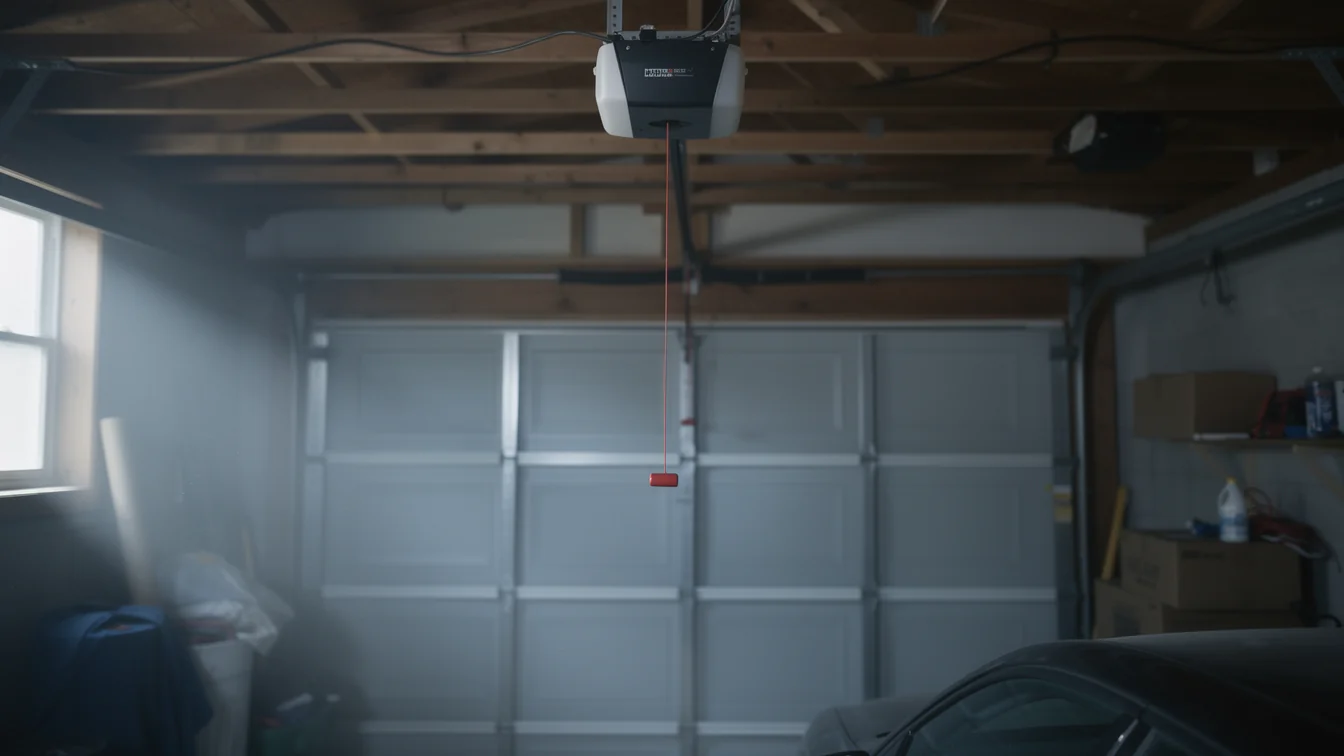
If the door won't move at all and the opener motor is humming, don't keep hitting the button. That's almost always a broken spring with the full dead weight of the door now on the opener's gearing, and running it that way can strip the gear in a few tries.
One thing we won't do is replace an opener to fix a spring problem, or vice versa - they fail independently, and swapping the wrong part just delays the real fix.
What we find
What the Weather Here Does to It
This stretch of the valley sits in a moderate heat band, not a true cold-weather zone, and that changes what actually kills springs here compared to colder parts of the country. Steel contracts and gets brittle when a spring goes in cold weather - that's the classic winter-morning snap you hear about elsewhere. Azusa doesn't put that kind of cold stress on hardware most years.
What the heat band does instead is slower and less dramatic: lubricant on torsion springs and rollers breaks down faster under sustained warm temperatures, and metal fatigue builds from repeated expansion and contraction through the day rather than from a single cold shock. A spring here is more likely to give out mid-cycle on an ordinary afternoon than to snap on a cold morning, which means the warning signs - slower lifts, uneven tension, a little more noise than last month - tend to show up gradually instead of all at once.
That gradual pattern is actually good news if you catch it early. A spring that's losing tension slowly from heat-driven wear can usually be caught and replaced on a scheduled visit, not an emergency one.
How we work
The Problem
Put the two facts together - housing built mostly between the 1960s and 70s, sitting in a moderate heat band rather than a cold one - and you get a specific kind of wear pattern. The hardware is old enough to be tired, but the climate doesn't deliver the sharp cold-weather trigger that makes failures obvious and sudden. Instead, springs and rollers degrade quietly under heat cycling, and a lot of homeowners don't notice until the door is already struggling on every single lift.
That's the problem we actually see on these calls: not a door that broke overnight, but one that's been losing ground for months because nothing dramatic ever happened to flag it. The fix is usually straightforward once we're there, but the lead-in to the call is almost always longer than it should have been. We'd rather get a call at the first grind or the first uneven lift than after the opener has been straining against a dead spring for a few weeks - that strain shortens the life of the opener too, and that's a second repair nobody needs to add to the first.
Talk to a local pro
Garage door trouble in Azusa?
Same-day service with honest, upfront quotes.