The Cost of This Job
Valinda is a small pocket as these things go - 4,737 households, which means the work we see here clusters tightly around one kind of house rather than spreading across a wide mix of builds and ages.
Hidden original hardware
That matters for cost because a repair quote isn't really about the town, it's about what's behind the panel, and in Valinda that's usually original hardware from a house built around 1957. A torsion spring job on a door that age costs differently than the same job on a door from the 1990s, mostly because the shaft diameter, drum size, and bracket spacing on older track don't always match what's on the shelf today.
Bracket adaptation labor
Sometimes the part is a direct swap. Sometimes it isn't, and we end up adapting a modern spring to an old bracket, which adds labor but avoids a full track replacement. Median household income here runs $99,979, which puts most routine repairs and even a full door replacement within reach for the typical owner, without it being a stretch.
Wide price spread
We don't post a price list because the spread between a cable job and a full door swap is wide, and guessing a number before we've seen the door does nobody any favors.
How Long It Takes
We travel from Azusa, 7 miles out, so a Valinda call starts with that drive - not a long one, but it's part of how a visit gets scheduled, not something we promise a window around.
Parts, not labor, delay
Once the truck is on site, most spring, cable, and roller jobs move at a normal pace. What stretches a job here is parts, not labor. A house built in 1957 sometimes has a bracket spacing or a hinge pattern that current stock doesn't carry off the shelf.
Adapting or ordering
When that happens, we either adapt what we've got on the truck or order the part, and the order is the delay, not the repair itself. We tell owners this up front rather than letting a quick fix turn into a surprise second visit.
Replacement takes longest
Opener swaps run shorter than spring jobs in most cases, since the mounting hardware on a modern opener is more forgiving of older framing than torsion hardware is. Full door replacements take the longest, simply because measuring, ordering, and installing a new door is a bigger job than any single-part repair.
What the Repair Takes
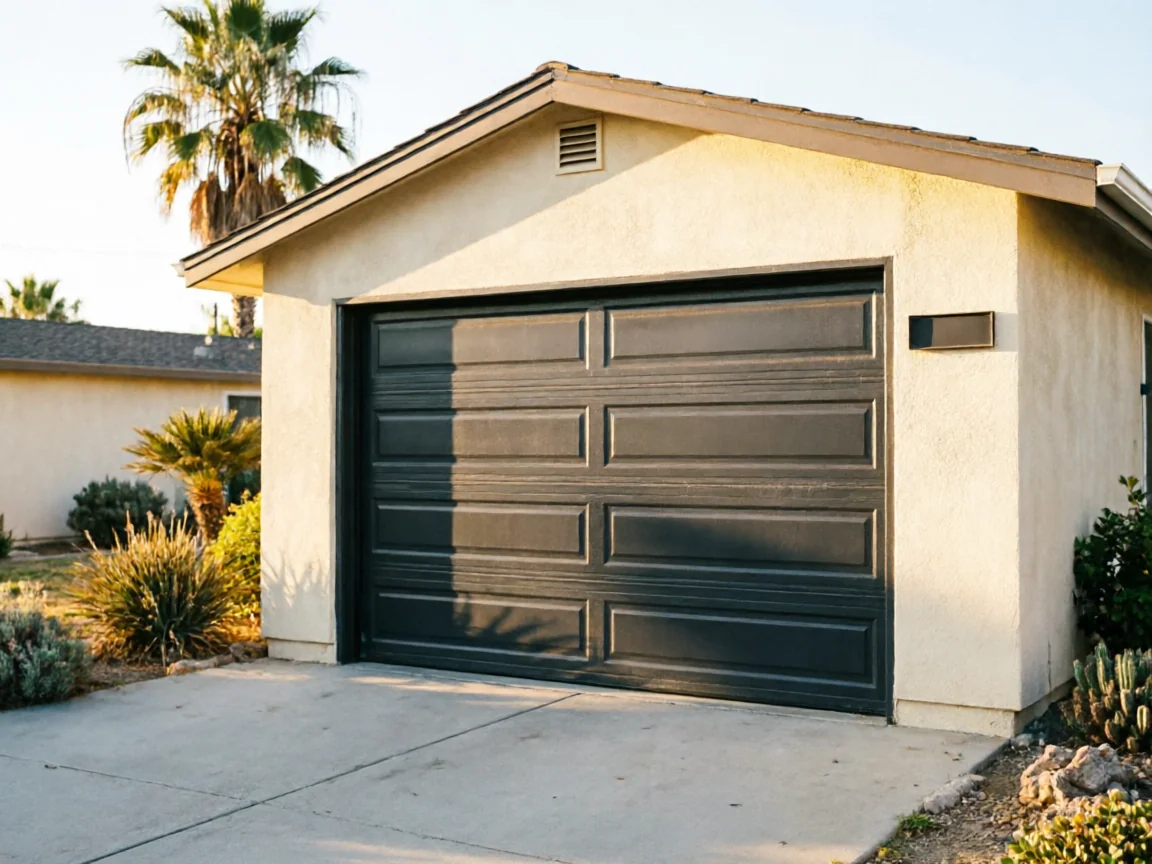
Because the median home in Valinda dates to 1957, a lot of the original doors still in service are one-piece slab style on side-mounted track - hardware that current production doesn't match without some adapting.
Original versus swapped setup
A repair here often starts with figuring out whether we're dealing with that original setup or a door that's already been swapped once since the house was built. For a broken torsion spring, that means matching wind direction and wire gauge to a shaft that may not be a standard modern size.
Side-mount bracket stress
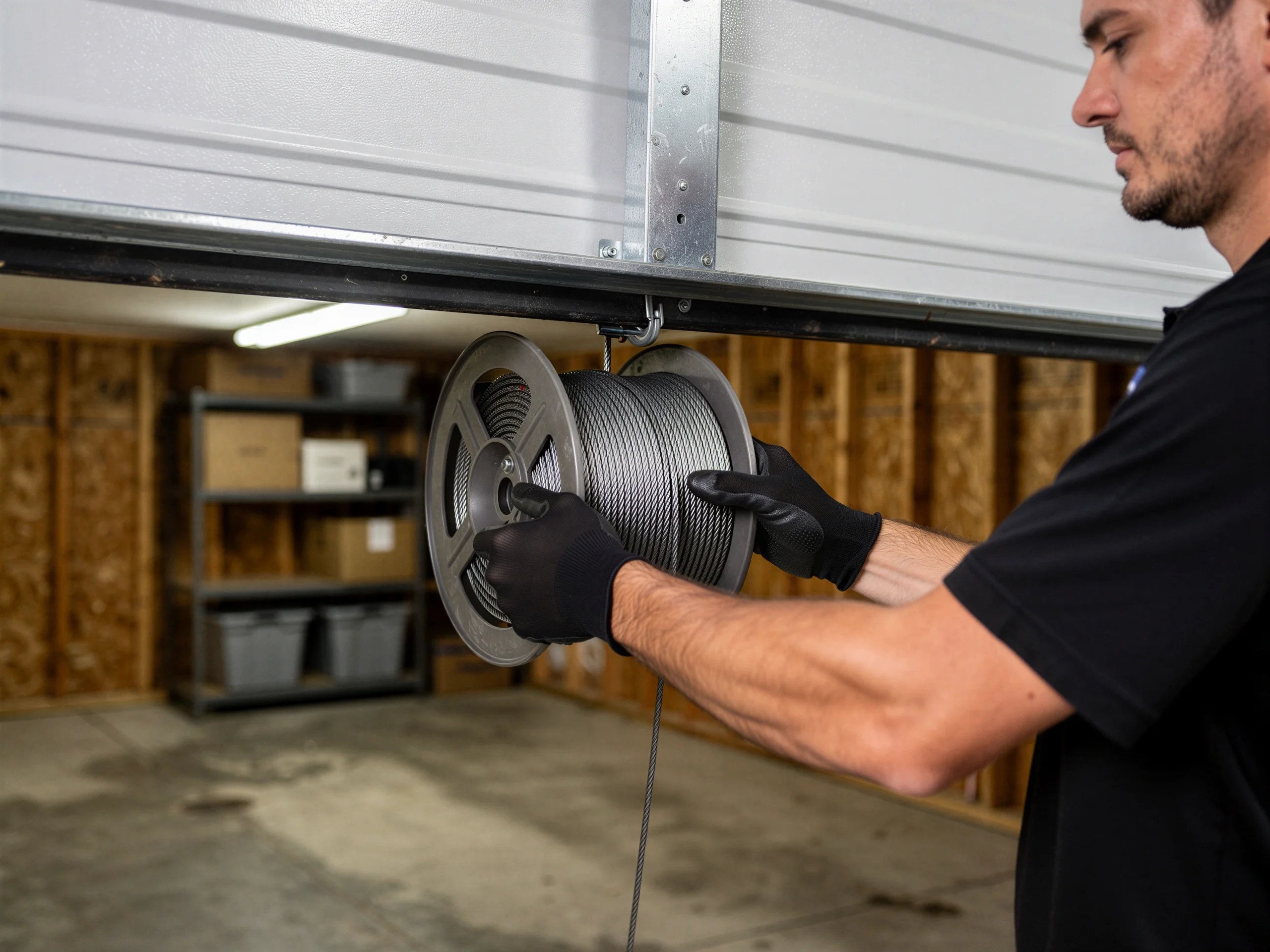
For a snapped cable, it means checking whether the drum and track are original too, since a cable failure on old side-mount hardware stresses the bracket differently than it does on a centered torsion setup. Opener work takes less adapting, since openers mount to the header and don't care much what decade the door track is from.
Rusted galvanized track
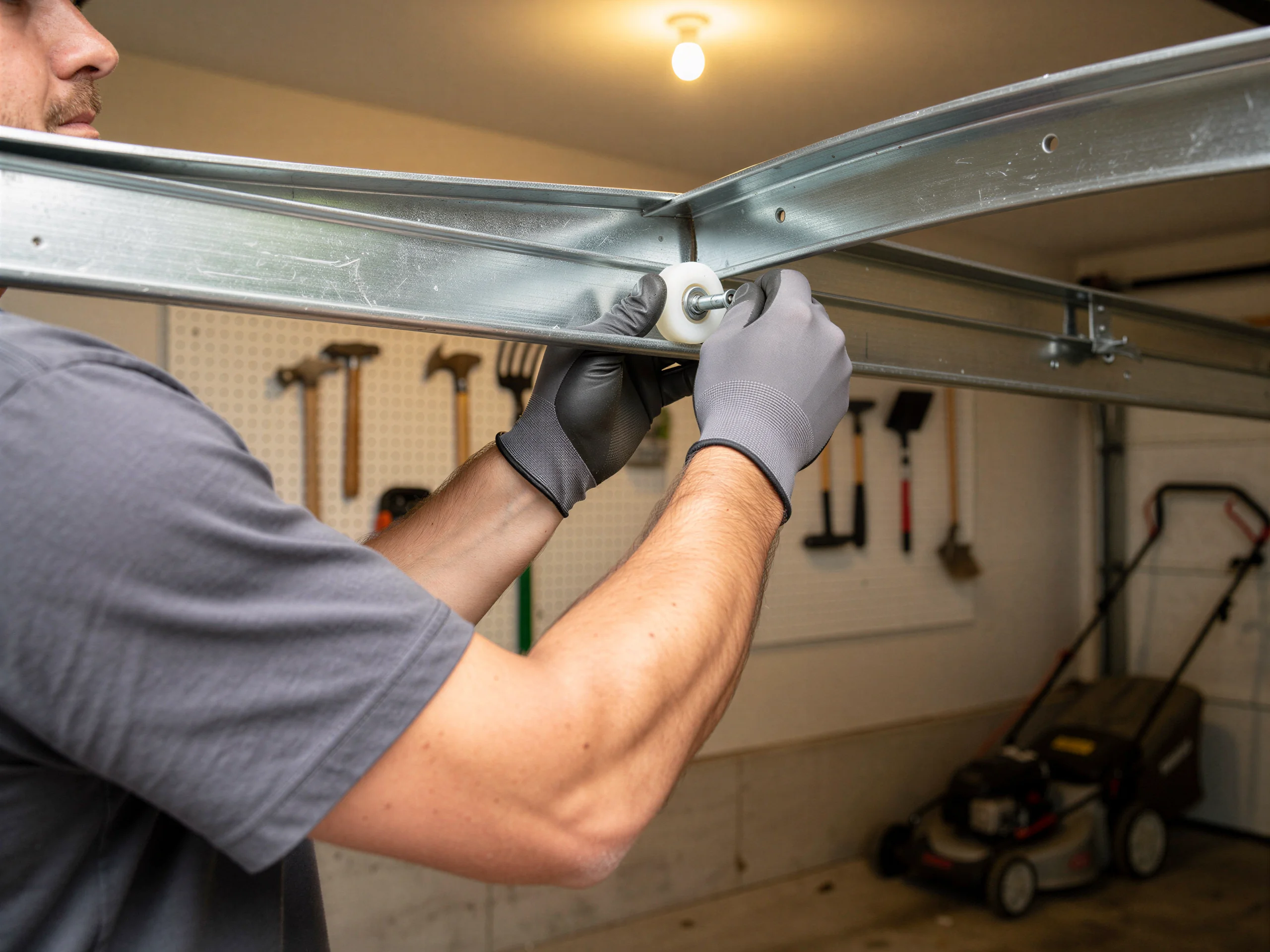
Roller and hinge jobs are usually straightforward unless the track itself has rusted or bent, which happens more on older galvanized track that's seen sixty-plus years outside. We carry common sizes on the truck. What we don't carry is every obsolete bracket pattern from houses this age - that's the one honest limit on same-visit completion here.
The Symptom
In this area's moderate heat climate, the complaint we hear most from older Valinda houses is a door that's gotten noisy or sluggish over the summer rather than one that's failed outright.
Dry grease noise
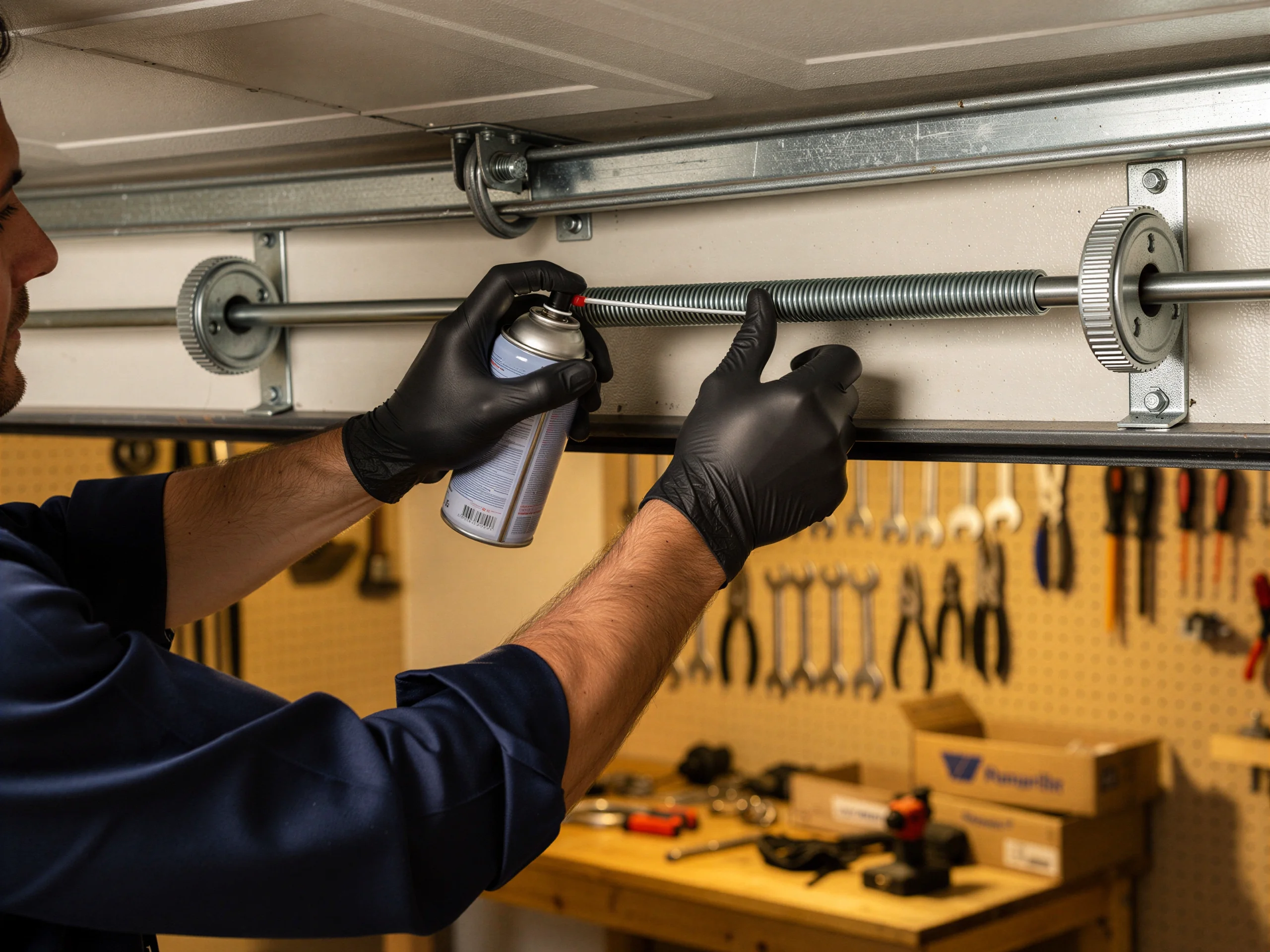
Heat dries out the grease on rollers and hinges faster than it would in a cooler band, and on a door with 1957-era steel panels, that shows up as grinding at the top of the track before it shows up as a full jam.
Opener reversal causes
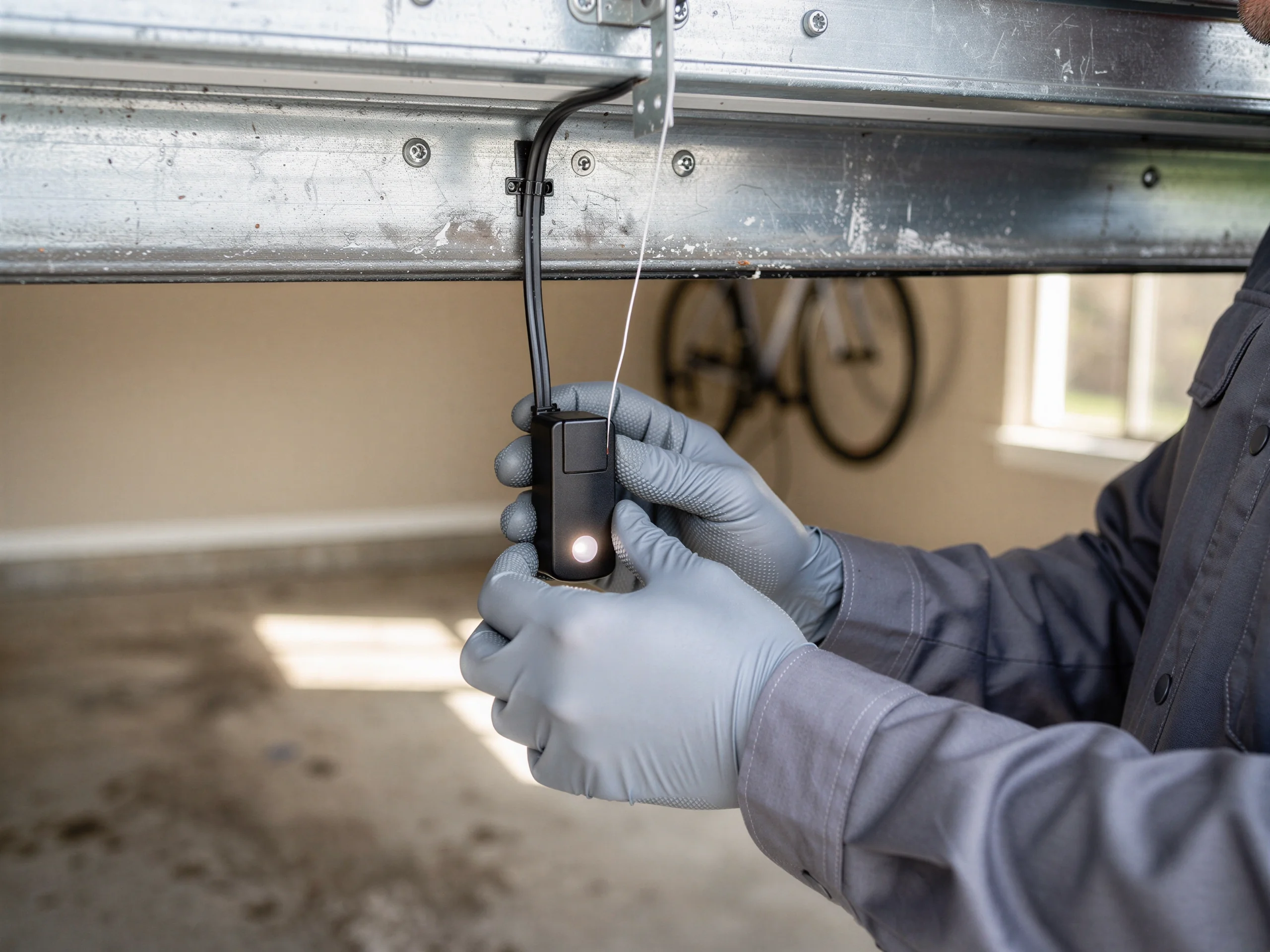
A second common symptom is an opener that runs but doesn't fully close the door, or reverses partway. On houses this age, that's often a photo-eye or limit-switch issue on a newer opener bolted to decades-old framing, not a problem with the door itself.
Weakened spring from cycles
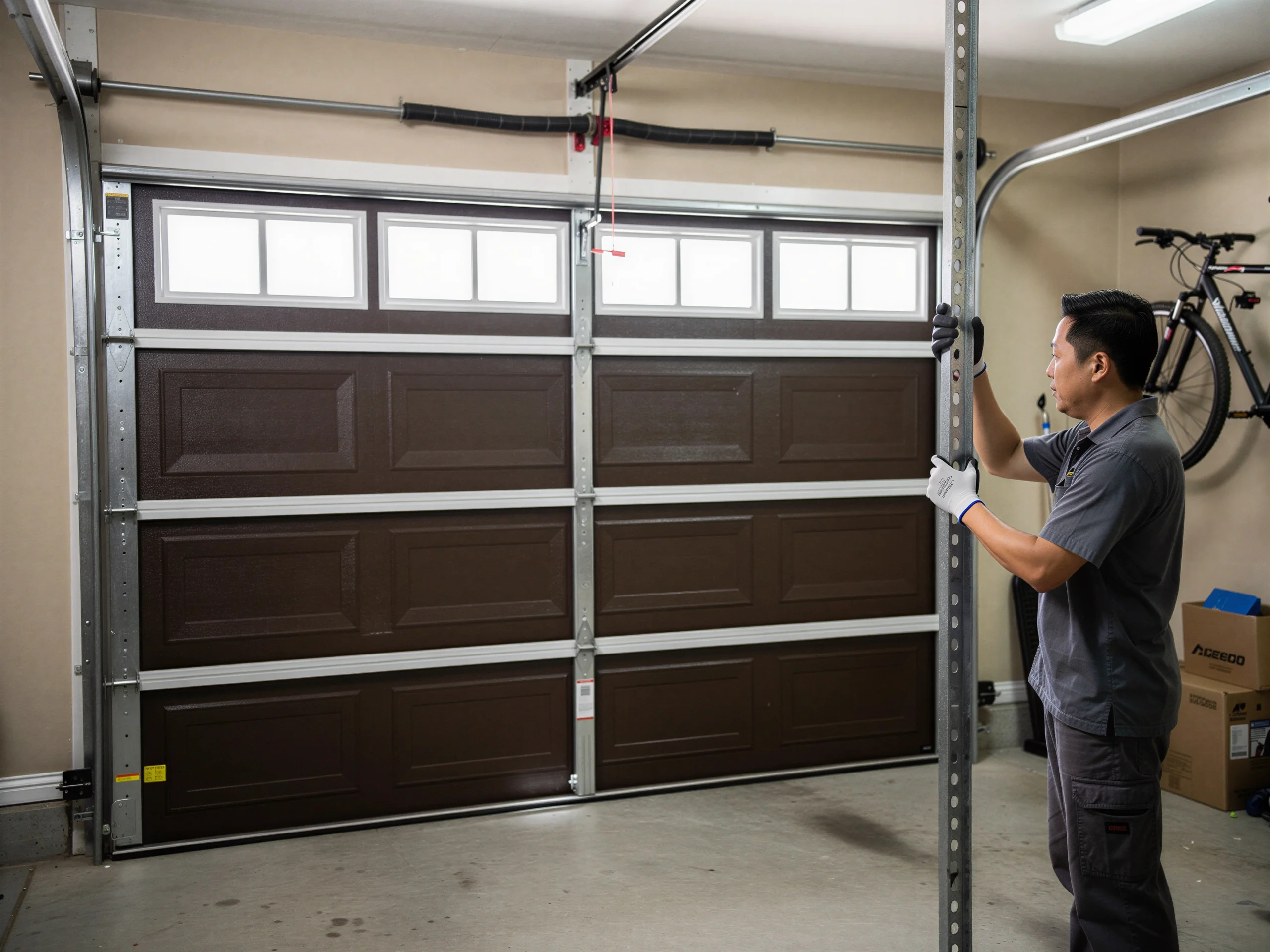
A third: the door is heavy to lift by hand, which almost always points to a weakening torsion spring rather than anything wrong with the opener. On original 1957 hardware, that spring has usually been through more open-close cycles than it was built for, and it fails without much warning once it goes.
What Can Go Wrong
The main risk on a house this age is treating a symptom instead of the cause. A sagging door gets blamed on the opener when the real issue is a stretched or frayed cable on original side-mount hardware, and fixing the opener alone leaves the cable to fail later, sometimes taking the track bracket with it.
Broken springs on older torsion setups can also damage adjacent hardware if they go while the door is under load - a cable can jump the drum, or a bent shaft can throw the whole assembly out of alignment. That turns a single-part repair into a multi-part one.
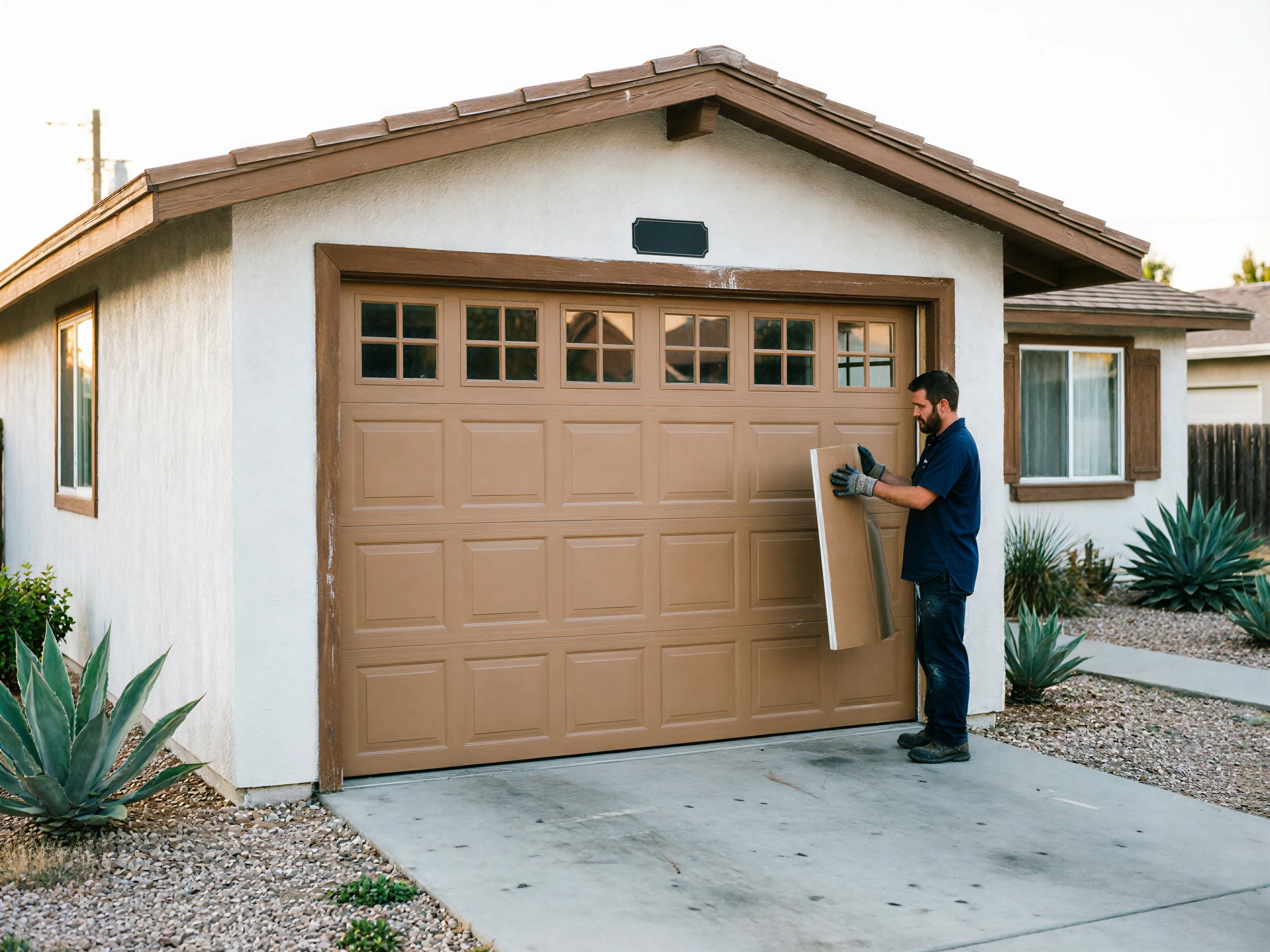
Here's the honest limit: on a door old enough to match this area's 1957 median build year, there's a point where patching one more part costs more over time than replacing the door outright. We'll tell you when we think that point has arrived rather than keep billing small repairs on a door that's past its working life. We don't do cosmetic panel matching on old steel doors either - if one panel is dented and the rest don't match current stock, we'll say so before we quote anything.
Talk to a local pro
Garage door service in Azusa?
Same-day service with honest, upfront quotes.